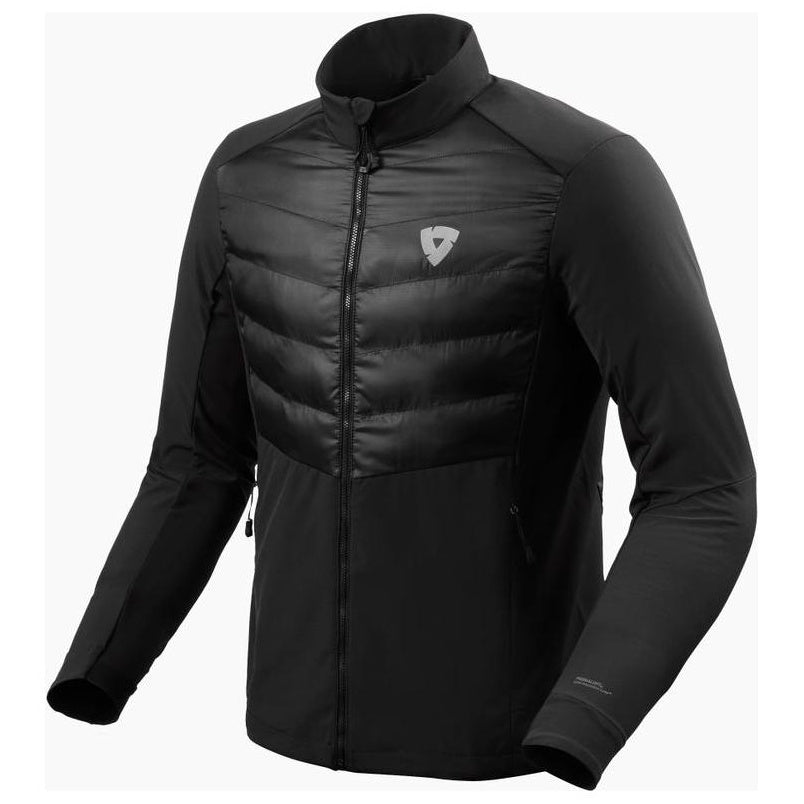
Add warmth to your riding outfit with motorcycle mid layers, including insulating jackets, gilets and trousers. A separate layer lets you adapt your kit for cool starts, longer journeys and changes in the weather. Choose the coverage and thickness around your existing riding clothing so you stay comfortable without restricting movement.


Where does a mid layer fit?
A mid layer normally sits over a base layer and beneath your protective outer clothing. Its main role is to add insulation. Before choosing one, look at the thermal lining already fitted to your jacket or trousers and decide whether you need to supplement it or use a different layering arrangement.
Removable layers can be useful when a cold morning becomes a warmer afternoon. Think about where you will carry the garment once removed, and whether you also want to wear it during stops off the bike.
Choose the coverage you need
A full-sleeve jacket
Choose this format when you want insulation through the torso and arms. Check the sleeves beneath your riding jacket, particularly at the elbows and cuffs. Collar height matters too when several layers meet around the neck.
A gilet or vest
A sleeveless layer concentrates coverage around the torso and leaves the arms without an extra sleeve. It can be useful when you have limited space inside your jacket sleeves. Compare body length and the fit of the arm openings.
Insulating trousers or leggings
For lower-body warmth, check the layer beneath your usual riding trousers. Sit down and bend your knees, then assess the waist and boot overlap. Make sure the extra fabric does not move the outer garment's knee protectors out of position.
A layer for carrying on tour
Compare packed size, weight and storage arrangements. REV'IT!'s Core 2 jacket is one example of an insulating layer supplied with a transport bag. Check the details of your chosen garment rather than assuming every mid layer packs in the same way.
How thick should the layer be?
Choose enough warmth for the riding you do while preserving the fit of your outer kit. Try the complete combination fastened, reach towards the handlebars and check the shoulders, chest and elbows. More thickness is not useful if you can no longer move comfortably or close the garment correctly.
Compare fabric construction, insulation and ventilation with your usual conditions in mind. A light layer for a cool summer evening and a substantial winter layer solve different problems. The motorcycle's weather protection and the length of your journeys also help determine what feels practical for you.
Warmth, weather protection and impact protection
An insulated jacket should not automatically be treated as a waterproof or protective riding outer. Read its stated purpose and use it as part of the intended clothing system. If rain protection is missing from your outfit, compare waterproof over-clothing separately.
For electrically supplied warmth, explore heated motorcycle clothing and its power requirements. Whichever approach you choose, check it with your riding jacket before committing to the combination.
Look after the insulation
Follow the label for washing, drying and storage. Different fabrics and insulation types need different care, so avoid applying one method to every garment. Allow the layer to dry as directed before packing it away after a journey.
Try the layer beneath your riding jacket
Bring the outer clothing you already use to our Wolvey showroom. Contact Moto Central beforehand about specific sizes, and compare the complete outfit in a riding position rather than judging the mid layer on its own.