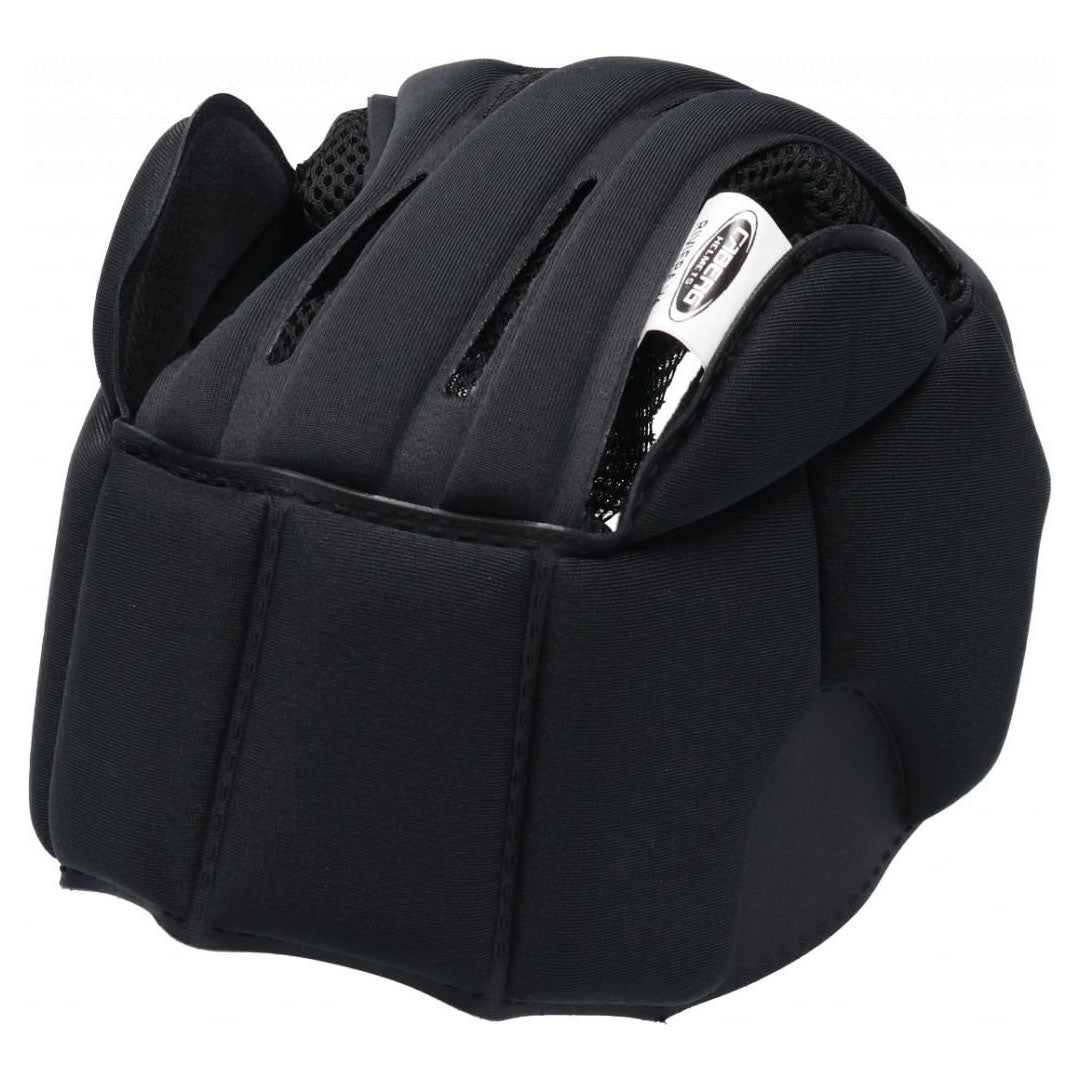
Motorcycle helmet padding includes replacement cheek pads, centre pads, crown liners and complete removable interiors for specific helmet models. The correct parts can refresh worn comfort padding, make routine hygiene easier or fine-tune the fit where the helmet manufacturer provides approved alternative thicknesses.
Compatibility must come first. Helmet interiors are matched to a particular brand, model, generation, approval version and often a limited group of shell or helmet sizes. A pad that looks similar may use different studs, tabs, channels or emergency-release details, so it should never be forced into place.


Types of motorcycle helmet padding
Cheek pads
Cheek pads shape the fit around the face and help stabilise the helmet. Some manufacturers offer several thicknesses for the same helmet model. A thicker option generally creates a firmer cheek fit within that particular system, while a thinner option creates more room. Thickness numbers cannot be compared safely across unrelated models.
Centre and crown pads
Centre pads and crown liners affect contact around the top, sides, front and rear of the head. Their sizing may follow the helmet size, a pad code or a manufacturer-specific fit system. They should sit smoothly, with no folded edges, exposed fasteners or pressure created by incorrect installation.
Complete interior sets
A full removable lining set can be useful when several washable comfort components have become worn or when restoring a compatible helmet after extended use. Check exactly what is included because a set may contain the crown and cheek sections, while neck rolls, chin curtains or other pieces can be separate.
Custom-fit options
Selected current helmets support manufacturer-designed fit adjustment. Shoei lists alternative cheek-pad thicknesses for models including the Neotec 3, GT-Air 3 and X-SPR Pro, while Schuberth offers specific Custom Fit padding for certain current helmets. This does not make parts interchangeable between product families.
Replacement for wear
Comfort foam and fabric can compress, lose support or become difficult to freshen over time. Original replacement padding can improve comfort and hygiene when the shell, retention system and energy-absorbing liner remain serviceable. It does not reset the age or service life of the helmet.
Padding covers and small components
Some listings cover an individual pad, fabric cover, ear pad or model-specific component rather than a complete pair or full lining. Read the title, variant and supplied-parts information carefully before ordering.
Comfort padding is not the EPS impact liner
The removable fabric and foam interior is different from the rigid energy-absorbing EPS beneath it. Replacement comfort padding cannot repair compressed EPS, a cracked shell, damaged strap mount or a helmet that has sustained an impact. If structural damage is suspected, stop using the helmet and follow the manufacturer's replacement guidance.
How to identify the correct replacement pads
Start with the label on the helmet, not its colour scheme. Record the brand, complete model name, helmet size and approval generation where relevant. Products such as AGV K3 ECE 22.06 and K3 SV pads, Biltwell Gringo R22.06 and earlier R22.05 pads, or Bell Bullitt and Bullitt GT parts can be distinct even when the names appear closely related.
Remove the existing comfort pad only as described in the helmet manual and look for a type code, size or thickness marking on its reverse. Shoei, for example, states that the original cheek-pad size can be found on the back of the pad. Compare every available identifier with the Moto Central listing rather than choosing on helmet size alone.
Then check the product variant. A listing may cover several helmet sizes but require a particular millimetre thickness, pad code or size group. Higher millimetre numbers describe thicker pads within many systems, but the effect and compatibility are defined by that manufacturer and model.
Using padding to fine-tune fit
Alternative padding is for refining an otherwise appropriate helmet, not correcting the wrong shell size or unsuitable internal shape. The crown should make even contact without a concentrated pressure point, and the cheek pads should hold the face firmly without pain, numbness or preventing normal fastening and breathing.
With the strap secured, the helmet should move the scalp when gently rotated rather than sliding independently around the head. It should not roll forward over the eyes or lift excessively at the rear. New comfort padding can relax slightly as it beds in, so do not start with a loose fit in anticipation of further compression.
Changing cheek pads may alter side pressure but will not normally solve a crown-shape mismatch. If discomfort is concentrated at the forehead, temples or rear of the head, the helmet model or head-pad configuration may be the issue. Moto Central's fitting team can assess the whole fit before recommending a pad change.
Installing replacement helmet padding
Work on a clean surface and remove one section at a time so the original routing remains clear. Align studs, hook-and-loop panels, plastic tabs and channels without bending or trimming them. Make sure no edge sits beneath the retention strap and that speaker pockets, wiring channels or emergency-release tabs remain arranged exactly as the manufacturer intended.
After installation, check every fixing by hand. Put the helmet on, fasten it correctly and confirm that no pad moves, folds or exposes a hard fitting. If the manual requires a particular fitting order, tool or dealer procedure, follow it. AGV advises using original parts and contacting an authorised dealer when the correct operation is uncertain.
Cleaning and replacing removable liners
Wash only the components the helmet manufacturer identifies as removable and washable. Use the stated temperature and cleaning method, avoid aggressive detergent and let the parts air-dry completely away from direct heat. Never refit damp padding or attempt to soak the fixed EPS liner.
Inspect the fasteners, backing plates, seams and foam whenever the pads are removed. Replace components that are torn, distorted or no longer secure. If replacement padding will not attach exactly like the original, stop and recheck the part number and helmet generation.
Why buy helmet padding from Moto Central?
Moto Central brings together hundreds of model-specific interiors from brands including Shoei, Arai, AGV, Schuberth, Caberg, Bell, Shark and Biltwell. That breadth is useful only when the match is correct, so our listings identify the intended helmet family, available variant and thickness wherever supplied.
Our Hinckley showroom also provides practical helmet-fitting support. If you are deciding whether you need thicker cheek pads, a different centre pad or a different helmet shape altogether, the team can assess the helmet as a complete system rather than treating padding as a universal fix.
Browse our motorcycle helmets, explore wider helmet spares and accessories, or see the dedicated helmet cleaning range for suitable care products.
Motorcycle helmet padding: customer questions
Can thicker cheek pads make a helmet fit more securely?
They can create a firmer cheek fit when the helmet manufacturer approves that thickness for the exact model and size. They cannot correct an unsuitable shell size or crown shape.
Are cheek pads interchangeable between helmet sizes?
Sometimes within a defined model and shell group, but never assume. Use the manufacturer's compatibility chart, pad code and product listing for the precise helmet.
Does 35 mm mean the same fit across every brand?
No. Millimetre markings are meaningful only within the relevant manufacturer's pad system. Shape, foam construction and attachment points also differ.
Can new padding make an impacted helmet safe again?
No. Comfort padding cannot restore a damaged shell, EPS liner, strap or other protective structure. An impacted or structurally damaged helmet needs assessment and usually replacement according to its maker's guidance.
Can I wash all motorcycle helmet padding?
No. Only remove and wash parts identified as washable in the helmet manual. Use the specified method and allow every component to dry fully before refitting.